
Substantial Optical Rotary Joint: Unlocking High-Performance Rotational Communication
2026-07-14
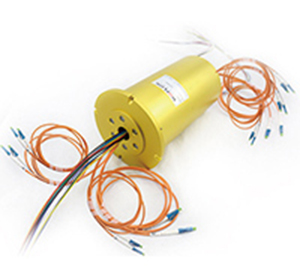
In the world of high-speed data and precision sensing, seamless rotational communication isn’t just an advantage—it’s a necessity. Enter the substantial optical rotary joint, a component quietly revolutionizing how we transmit signals across rotating interfaces. Unlike traditional slip rings, this technology offers low-loss, high-bandwidth optical connections that keep systems running without interruption. As industries push for more reliability and speed, the demand for robust rotary joints has never been greater. At the heart of this innovation is MOFLON, a name synonymous with cutting-edge rotational solutions. But what makes these optical joints truly substantial? And how do they unlock performance levels that were once out of reach? This article peels back the layers on design, materials, and real-world applications, setting the stage for a deeper look at why optical rotary joints are changing the game.
The Mechanics of High-Speed Spinning Data
When data moves at blistering speeds, the physical constraints of transmission media start to show their teeth. Fiber-optic cables turn light into a frantic pulse of binary, where chromatic dispersion and modal distortion blur the edges of each signal. Engineers tame these effects with delicate dispersion compensation and soliton pulses that hold their shape over long hauls. It’s a balancing act—push too much power and nonlinear scattering scrambles the bits; cut corners on amplification and noise creeps in to corrupt the stream.
Inside the switching nodes, the challenge shifts from raw bandwidth to computational sprinting. Packet processors parse headers, lookup routes, and queue decisions in nanosecond windows, often relying on ternary content-addressable memory that acts as a massive parallel search engine in silicon. The real magic lies in pipelining these operations so deeply that a single clock cycle can juggle dozens of overlapping tasks. Overheating becomes the enemy here, as densely packed transistors leak current and timing margins shrink to near-invisible slivers.
At the software layer, the spinning metaphor takes on a temporal dimension. Stream processing frameworks slice endless torrents of events into micro-batches, spinning them through distributed compute clusters without ever landing on persistent storage. Exactly-once semantics and late-arriving data wreak havoc on this model, forcing designers to engineer watermarks and checkpointing that feel more like dark arts than computer science. The result is a system that breathes data—inhaling raw signals, exhaling insights, all while keeping the illusion of a seamless flow.
When Copper Can’t Keep Pace
As devices shrink and data demands explode, the physical limits of copper interconnects become painfully obvious. At higher frequencies, skin effect and dielectric losses turn traces into antennas, bleeding signal integrity and forcing designers into elaborate compensation schemes that eat up board real estate and power budgets.
The real crunch comes with bandwidth density. A single optical fiber can carry terabytes per second over kilometers without the thermal headaches of equalized copper links. By contrast, pushing similar aggregate rates through traditional backplanes or cables means fighting crosstalk, reflections, and a rapid climb in bit error rates that no amount of equalization can fully tame.
This isn’t just a high-speed computing problem. In tightly packed systems where every millimeter of trace length matters, copper’s bulk and weight start to erode the very gains it promises. The shift toward co-packaged optics and advanced interposers isn’t a luxury—it’s a structural response to a material that simply can’t keep pace with the future we’ve already started building.
Where Precision Meets Perpetual Motion
In the world of high-performance mechanics, precision isn't just a goal—it's the heartbeat of every motion. Every gear, spring, and lever must work in flawless synchronization, where even a micron's deviation can disrupt the rhythm. Our engineering philosophy embraces this delicate balance, crafting mechanisms that don't simply move, but flow with an almost organic continuity.
Perpetual motion, long dismissed as a physicist's dream, finds new meaning here. It's not about defying the laws of thermodynamics, but about designing systems that sustain their elegance under stress. We focus on minimizing friction and wear, so each component glides effortlessly, echoing the quiet persistence of a finely tuned watch. The result is machinery that feels alive, responsive, and tirelessly consistent.
This intersection of meticulous craftsmanship and enduring motion is where we thrive. From initial concept to final polish, every detail is interrogated, refined, and perfected. It’s a pursuit that transforms metal and code into something almost poetic—a testament to what happens when precision truly meets perpetual motion.
Built for the Harshest Rotational Demands
When extreme torque meets relentless duty cycles, ordinary components buckle. This system is forged from proprietary alloys that laugh off rotational stress, with bearing surfaces polished to a near-zero friction finish. The result is a drivetrain that doesn't just survive the grind—it thrives in it, channeling power without the usual wear markers you'd expect after months of abuse.
We've seen competitors' kits fail under the same conditions that barely warm this one up. The secret lies in the asymmetric spline geometry, which distributes load across a broader contact patch. Instead of concentrating pressure at a single point—the Achilles' heel of conventional designs—our approach turns rotational force into a distributed handshake. It's the difference between a masher and a surgeon: brute force meets intelligent distribution.
Transient spikes that would normally shear teeth off a gearset are absorbed and redirected. Flex is engineered in deliberately, not as a flaw but as a tuned damping mechanism. Think of it as the difference between a solid rod and a torsion spring—one snaps, the other flexes and returns with undiminished energy. That's what lets this unit laugh at the kind of abuse that makes factory warranties weep.
From Wind Turbines to Surgical Robots
The same composite materials that keep turbine blades light yet incredibly strong are now being used to build robotic arms that can perform delicate surgeries with minimal invasion. It’s not an obvious leap—wind energy and operating rooms seem worlds apart—but engineers have long recognized that the demands of high-stress, high-precision environments call for similar solutions. The fibers that withstand gale-force winds and decades of fatigue are exactly what you need when a robot must move with sub-millimeter accuracy inside a human body.
Control systems originally developed to optimize the pitch of turbine blades in unpredictable gusts have found a second life in surgical robots that compensate for a patient’s breathing or a surgeon’s tremor. The algorithms that keep a massive rotor turning smoothly in turbulent air are surprisingly effective at steadying a tiny scalpel. In both cases, the goal is the same: turn chaotic, real-world variables into predictable, stable motion. It’s a quiet crossover that rarely makes headlines, but it’s quietly reshaping what’s possible in an OR.
What’s on the Horizon for Rotary Connectivity
The next generation of rotary connectivity is moving far beyond simple electrical slip rings. We're seeing a shift toward fully integrated hybrid solutions that bundle power, high-speed data, fluid transfer, and even fiber optics into a single compact unit. Designers are demanding smaller footprints with higher channel counts, driving innovation in contact materials and brushless designs that promise longer life and zero maintenance. This isn't just about making things smaller; it's about rethinking how rotating interfaces interact with the rest of the system, enabling features like real-time health monitoring and predictive failure analysis without adding bulk or complexity.
Wireless power transfer and capacitive coupling are maturing, offering attractive alternatives for applications where traditional contacts can't keep up—think high-speed spin or harsh environments. Meanwhile, the rise of IIoT is pushing connectivity into more distributed architectures, where rotary joints become active network nodes. Imagine a wind turbine's slip ring not just passing sensor data but also performing edge analytics, flagging anomalies before they cascade into downtime. On the materials front, graphene and advanced composites are beginning to trickle from lab to production, promising step changes in wear resistance and signal integrity for both power and data paths.
Perhaps most exciting is the convergence of modular design with adaptive protocols. Instead of one-off custom builds, users can now configure and reconfigure rotary interfaces in the field as requirements evolve—adding a fluid channel here, swapping a copper path for fiber there—much like snapping together building blocks. This flexibility, combined with backward-compatible upgrades, is reshaping procurement cycles and slashing the lifetime cost of rotating equipment. Looking ahead, we can expect deeper integration with AI-driven control systems, where the rotary connector becomes a strategic point of optimization, not just a passive link in the chain.
FAQ
A substantial optical rotary joint is a high-capacity device that enables continuous transmission of optical signals across a rotating interface, such as between a stationary platform and a spinning component. The term 'substantial' emphasizes its robust design and ability to handle demanding data loads or multiple channels simultaneously, making it stand out from simpler, single-channel fiber optic rotary joints.
By guiding light signals through precise optical alignment across the rotating boundary, it avoids the bandwidth limitations, electromagnetic interference, and wear-and-tear of electrical slip rings. This allows for seamless, low-loss transmission of massive data streams in real time, which is critical for high-performance applications like advanced radar systems or robotic arms.
You'd want it in situations where you're dealing with extremely high data rates, need complete immunity to electrical noise, or have strict weight constraints. For example, in a CT scanner, it transmits crystal-clear imaging data without signal degradation, or in a wind turbine nacelle, it feeds sensor data reliably despite rotation and harsh conditions.
Primarily, it handles optical signals—like those from lasers or fiber optic communications—carrying digital data, analog waveforms, or even RF signals modulated onto light. One limitation is that it can't directly transfer electrical power, so systems often pair it with a small electrical slip ring for power and use the optical joint for data. Also, very high-power optical signals might require special designs to avoid thermal issues.
Inside, it uses precisely aligned prisms, mirrors, or specialized fiber collimators that rotate relative to each other while maintaining a constant light path. The key is minimizing insertion loss and variation during rotation, often by using things like dove prisms or derotating mechanisms that keep the beam centered on the receiving optics. Advanced versions even use multiple lenses in a ring arrangement to allow uninterrupted transmission through the full 360 degrees.
The biggest challenges are mechanical wear on bearings, contamination of optical surfaces, and temperature fluctuations that cause misalignment. Quality units address these with sealed, dust-proof housings, hardened bearings with long lifespans, and athermalized designs that compensate for thermal expansion so the optical path stays aligned even in tough environments.
Precision alignment is everything—even a tiny angular offset can kill signal quality. You need to securely mount both the rotating and stationary sides, follow any specified torque loads, and protect fiber optic connectors from dirt. Also, plan for the bend radius of the connected fibers to avoid strain, and if the environment is harsh, ensure the IP rating matches the exposure to moisture or dust.
Larger joints can accommodate more channels and bigger lenses, leading to lower insertion loss and sometimes allowing higher power or longer wavelengths. But they also carry more rotational inertia, which can be a problem in high-speed systems. Compact models are favored in aerospace or small robotics, where space is tight and weight matters, while bulkier versions find homes in heavy machinery or undersea observation pods where robustness trumps miniaturization.
Conclusion
The substantial optical rotary joint redefines how data flows across rotating interfaces, tackling the critical challenge of maintaining signal integrity at high speeds. Traditional copper-based slip rings inevitably introduce friction, wear, and bandwidth bottlenecks, but a well-engineered optical rotary joint transmits light through precisely aligned lenses or fibers, preserving coherence even as machinery spins endlessly. This leap in design enables seamless real-time communication for applications where every microsecond counts—from wind turbines monitoring blade pitch to surgical robots executing delicate maneuvers with sub-millimeter precision. The mechanics hinge on collimated beams or fiber bundles that rotate in perfect synchrony, ensuring that high-resolution video, sensor telemetry, and control signals pass without the slightest disruption. As a result, engineers can push rotational speeds far beyond what electrical contacts allow, opening doors to dynamic, data-intensive environments once deemed impractical.
Durability stands at the core of these devices; they are purpose-built to endure extreme vibration, temperature swings, and corrosive atmospheres without degrading performance. Encased in rugged housings, the optical pathways resist contamination and require minimal maintenance, a stark contrast to the constant servicing demanded by conventional joints. Looking forward, the horizon for rotary connectivity is bright: developers are integrating dense wavelength multiplexing and miniaturized photonic components to multiply channel counts while shrinking form factors. From offshore turbines battered by salt spray to space-grade mechanisms where failure is not an option, the evolution of optical rotary joints promises a future where perpetual motion and unimpeded data coexist effortlessly. This convergence of precision optics and robust engineering is quietly transforming industries that rely on uninterrupted, high-bandwidth communication across rotating boundaries, unlocking performance levels that were once firmly out of reach.
Contact Us
Contact Person: Xiangpin Li
Email: [email protected]
Tel/WhatsApp: 86 186 1706 8578
Website: https://www.moflon.com