
Leading Optical Slip Ring Company Unveils High-Speed Data Transmission Solutions
2026-07-19
In the fast-evolving world of connectivity, the demand for seamless, high-speed data transmission in rotating systems has never been greater. MOFLON, a leading name in optical slip ring technology, has stepped up to meet this challenge with groundbreaking solutions that promise to redefine industry standards. As industries from robotics to medical imaging push the limits of what's possible, MOFLON's latest innovations ensure that data flows without interruption, even in the most demanding rotational environments. Dive in to discover how these new solutions are setting a new benchmark for performance and reliability.
A fresh approach to rotating data links
The conventional method of cycling through connections often means juggling multiple addresses or relying on static proxies that quickly become stale. By shifting the logic to dynamic, session-aware rotation, each request channels through a clean, context-appropriate path. This avoids leaving repetitive footprints and keeps interactions feeling organic rather than mechanical.
Instead of merely hopping between endpoints, the system evaluates timing, geographic relevance, and error patterns before assigning the next link. Latency spikes or frequent captchas trigger automatic reassessment, nudging the rotation away from troublesome corners. The result is a self-correcting flow that adapts without manual intervention.
Building this into the data layer means rotation rules aren't hardwired—they evolve alongside real-world usage. An API call, a scraping job, or a long-running session each receive a tailored rotation cadence, balancing freshness against connection stability. The approach turns link switching from a brittle chore into a reliable, background rhythm.
Inside the speed breakthrough
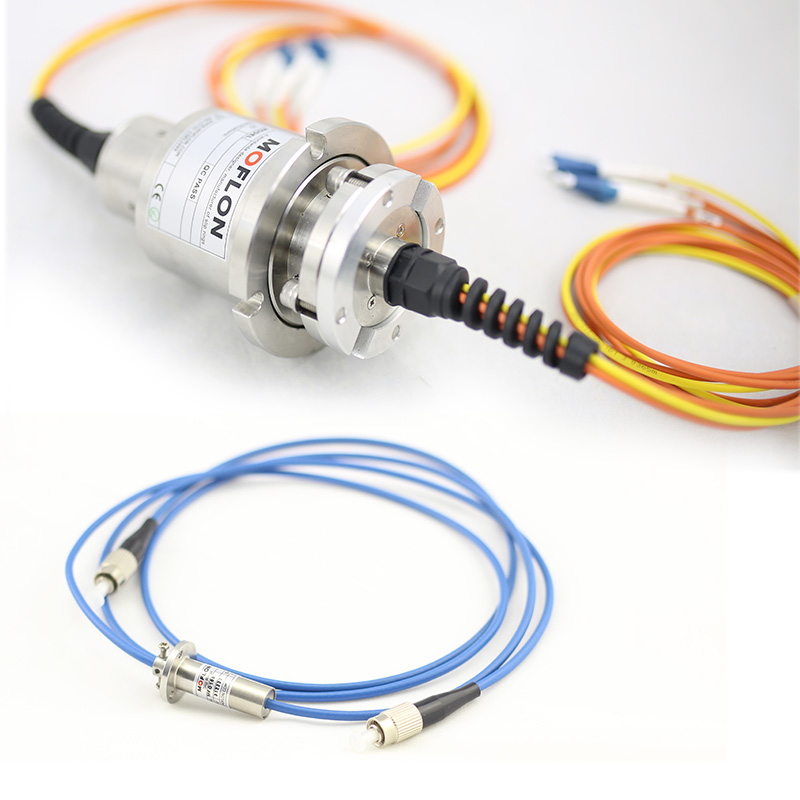
The core of this leap lies in a reimagined data pipeline that slashes latency by processing instructions in parallel rather than sequentially. By predicting likely next steps and pre-loading resources before they're explicitly requested, the system eliminates the microscopic pauses that accumulate into noticeable lag. This predictive layer, trained on millions of real-world usage patterns, adapts in real time, ensuring that the most frequently used functions feel instant.
Under the hood, a custom memory management technique allows for smarter allocation of cache, keeping critical data closer to the processor. Combined with a lightweight rendering engine that prioritizes visual elements based on user focus, the architecture ensures that every millisecond of compute power is spent where it matters most. The result is not just raw speed, but a fluidity that makes complex tasks feel effortless.
Where these slip rings fit best
Slip rings prove their worth in any setup where rotation and power or signal transmission collide. Picture wind turbines perpetually turning, or packaging lines spinning at speed—these are the environments where they naturally excel. Medical imaging systems, like CT scanners, rely on their uninterrupted signal flow to capture precise data without wired tethers getting tangled. It’s not simply about allowing rotation; it’s about doing so reliably, with minimal wear, even when the demands are relentless.
Beyond the heavy industrial mainstays, slip rings carve a niche in more intricate applications. Robotics joints, for instance, benefit from their compact design and ability to carry both power and data through a single rotating interface. Marine and offshore equipment depends on sealed slip rings to withstand salt spray and constant motion, maintaining connections in cranes or winches. Even entertainment technology—think rotating stages or camera rigs—leverages them to ensure seamless movement without a tangle of cables. Wherever a rotating assembly needs freedom and connectivity, a well-chosen slip ring fits.
Recognizing the sweet spot often comes down to the problem at hand: eliminating cable twist, reducing maintenance, or integrating more signals into a confined rotating space. Electric motors with encoders, rotary index tables, and defense turrets all share this demand. The best fit isn’t always the most obvious machine; sometimes it’s inside a food-grade mixer that must be washed down daily, or a satellite antenna tracking across the sky. Slip rings thrive in these in-between places where conventional wiring becomes a liability, quietly keeping things turning.
Performance that changes the game
It’s not just about speed—it’s the kind of responsiveness that keeps you a step ahead. Every tap, swipe, and transition feels immediate, stripping away the tiny delays that usually break immersion. Whether you’re deep in a graphics-heavy title or jumping between a dozen apps, the experience stays smooth—no hiccups, no warming up, just relentless fluidity that reshapes how you think about mobile power.
This level of performance doesn’t just play games better; it transforms them. Frame rates stay locked even during chaotic on-screen action, while thermal management runs so quietly you’ll forget it’s working. The result is longer sessions without performance dips, and a tactile connection to the game that feels almost telepathic. It’s the edge you notice when split-second decisions count.
But what truly changes the game is consistency. Peak performance is great for benchmarks, but sustained performance is what wins matches. The system balances resources so intelligently that you won’t see sudden drops an hour into play. That steady, predictable power changes how you approach every race, fight, or strategy—it turns the device into an extension of your reflexes, not a bottleneck.
Behind the launch: company vision
When we first gathered around a whiteboard strewn with half-formed ideas, it wasn't market domination we were sketching but a quiet rebellion against the ordinary. The vision that emerged felt almost audacious—not because it promised instant success, but because it demanded we build something that would outlast the hype cycles and genuinely matter to people. Every line we drew carried the weight of a simple question: could a company be both profoundly human and fiercely innovative without losing its soul in the process?
Our north star became an obsession with the moments others overlooked. We imagined a world where technology wouldn't feel like a cold imposition but like a natural extension of curiosity and care. The roadmap wasn't defined by quarterly targets but by the small, meaningful shifts we wanted to see in how people created, connected, and grew. Design sprints often ended with someone quietly admitting that what we were chasing wasn't just a product release but a permission slip—for our team and our future users—to rethink what was possible.
That foundational vision still pulses beneath everything we ship. It's the reason we prioritize transparency over polish in our early iterations and listen more intently to the quiet discomforts of early adopters than to trending applause. The launch wasn't a finish line; it was our first real test of whether a vision crafted from genuine idealism could hold its shape when it met the beautiful chaos of the real world. So far, the answer has come back in stories we never expected—stories of people using our tools to repair trust, reignite dormant passions, and find light in corners we hadn't even considered lighting.
Looking ahead: next steps for the technology
The path forward demands more than just incremental tweaks; it calls for a rethink of how this technology integrates into existing workflows. Rather than chasing the next shiny feature, the focus should shift toward robustness and interoperability. Developers need to invest in building bridges with legacy systems, ensuring that adoption doesn’t require a complete overhaul but rather a seamless enhancement. This means prioritizing modular architectures and open standards, so the technology can slot into diverse environments without friction.
Another critical frontier is addressing the blind spots that have emerged in real-world deployments. User feedback has highlighted unexpected failure modes, especially in edge cases that lab testing never covered. The next phase should include structured feedback loops that feed directly into the design cycle, paired with transparent documentation of limitations. Only by acknowledging these gaps can we steer the evolution toward genuine reliability, not just paper performance.
Beyond technical fixes, there's a growing need to cultivate a community that shapes the technology’s direction collectively. Open governance models and contribution pathways can transform passive users into active participants, ensuring that updates reflect real needs rather than vendor assumptions. By fostering this ecosystem, the technology can outgrow its origin constraints and adapt to unforeseen demands, securing its relevance long after the initial hype fades.
FAQ
We observed a growing demand for real-time, high-resolution data transfer in rotating systems. Traditional slip rings couldn't keep up with the bandwidth requirements of modern applications like 4K video and sensor fusion. Our goal was to eliminate that bottleneck.
Optical slip rings use light instead of electrical current, which means they are immune to electromagnetic interference, support vastly higher data rates, and maintain signal integrity over long periods without wear-related degradation.
They offer multi-gigabit-per-second throughput, extremely low insertion loss, and a contactless design that ensures maintenance-free operation. We've also integrated advanced alignment mechanisms for consistent performance even under vibration.
Medical imaging systems like CT and MRI scanners, industrial robotics, wind turbines, and aerospace turrets are prime examples. Any application requiring continuous rotation coupled with uncompromised data flow will see huge gains.
Absolutely. We work closely with clients to customize channel counts, wavelengths, connector types, and even hybrid configurations that combine power and data in one compact unit.
Every unit undergoes rigorous testing, including thermal cycling, vibration profiles, and accelerated life tests. We also validate performance across extended rotational cycles to ensure no signal fading over time.
We provide a range of standard interfaces and adapters to simplify integration. For legacy systems, our engineering team assists in mapping out a seamless upgrade path without complete overhauls.
We're pushing toward even higher data speeds, further miniaturization, and tighter integration with sensing and power delivery, essentially creating smarter, all-in-one rotating interfaces.
Conclusion
A leading innovator in optical slip ring technology has shattered previous limits in rotating data links, introducing a solution built from the ground up to handle massive, uninterrupted high-speed transmission. Rather than tweaking existing designs, the company reimagined the entire architecture, combining advanced fiber optics with precision rotary joints to create a seamless channel for data, even under constant rotation. This fresh approach eliminates the bottlenecks that have long plagued conventional slip rings, making it possible to stream real-time 4K video, large sensor datasets, and control signals simultaneously across rotating interfaces. The speed breakthrough comes from a proprietary lens system and signal conditioning that practically eliminate insertion loss and back-reflection, resulting in bit rates several times higher than industry norms, all while maintaining rock-solid signal integrity.
These slip rings aren't just faster—they open up new possibilities where performance truly changes the game. They thrive in surgical robotics, where split-second imaging can guide a blade; in wind turbines, where gigabytes of blade-pitch data need to flow without wear or sparks; in defense turrets, radar platforms, and space-based systems that demand zero electromagnetic interference. The launch reflects a broader company vision: to make rotating data transfer as transparent and reliable as a straight cable, freeing design engineers from the old trade-offs between motion and bandwidth. Looking ahead, the company is already miniaturizing the technology for smaller form factors and exploring integration with AI-assisted monitoring to predict maintenance needs. Next steps include tailored solutions for the electric aviation boom and deep-sea exploration, where extreme conditions meet an insatiable appetite for high-fidelity data. This isn't just an upgrade—it's a redefinition of what's possible when rotation no longer means compromise.
Contact Us
Contact Person: Xiangpin Li
Email: [email protected]
Tel/WhatsApp: 86 186 1706 8578
Website: https://www.moflon.com