
Chemical Soil Stabilizer for Road Construction: Boost Durability and Cut Costs
2026-07-31
When it comes to road construction, durability and cost-efficiency aren’t just goals—they’re necessities. Enter chemical soil stabilization, a game-changing approach that transforms weak subgrades into robust foundations. By leveraging advanced binders and additives like those from MST, projects can slash material costs, reduce maintenance, and extend pavement life—all while speeding up construction timelines. Curious how this technology is reshaping modern infrastructure? Let’s dig deeper.
Turn Unstable Ground into a Rock-Solid Road Base
Loose, shifting soil doesn't have to sideline your project. The trick lies in understanding what's happening beneath the surface—whether it's excess moisture, organic decay, or simply poor compaction—and then choosing the right mix of mechanical and chemical solutions to lock everything together. A well-compacted base starts with proper grading and drainage, but often that's just the first step.
For many sites, blending in a stabilizing agent like lime, cement, or fly ash transforms weak, water-sensitive soils into a durable layer that resists swelling and erosion. The key is to test the native material first so you don't over- or under-treat it. Once the stabilizer is mixed and moisture is dialed in, compaction forces those particles into a dense, interlocked matrix that can handle heavy loads without rutting.
Even then, the real secret is time. Giving the treated base a few days to cure—keeping it damp and covered—builds strength gradually, much like concrete. After that, a thin asphalt or gravel wearing course locks out surface water, and you've got a foundation that won't shift with the seasons. Regular inspections catch small issues before they turn into major failures, so the road stays reliable year after year.
Slash Your Project Budget with Longer-Lasting Results
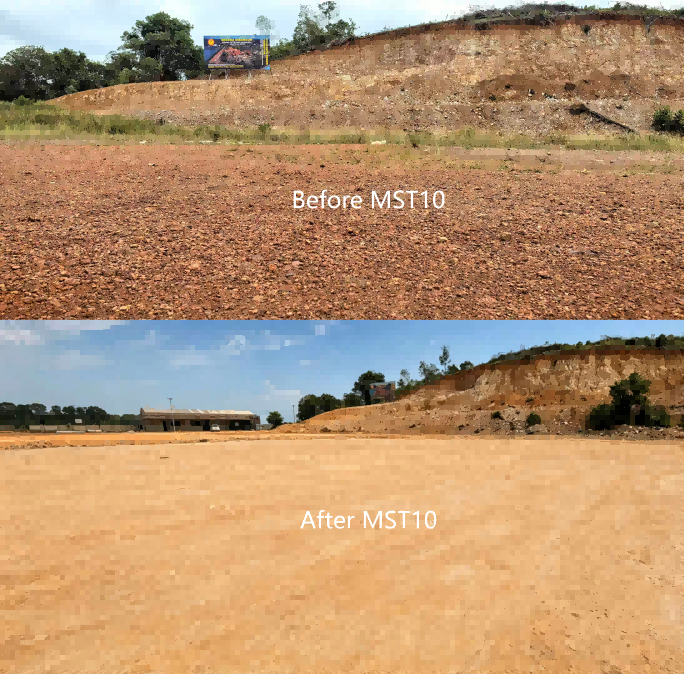
It’s easy to fall into the trap of chasing short-term savings, only to watch your budget balloon when cheap fixes fail. The real magic happens when you invest in durable solutions that keep delivering value year after year. Think about materials that resist wear, processes that streamline without constant tweaks, or training that empowers your team to avoid recurring mistakes. These aren't just expenses—they're shields against future financial drain.
We’ve seen firsthand how a slight shift in upfront thinking can erase recurring costs. One client swapped out a bargain supplier for a partner with a proven track record; the initial price stung a bit, but the drop in maintenance calls and downtime paid back tenfold within months. It’s not about spending more—it’s about spending smart. Every dollar aimed at longevity ripples through your project timeline, flattening the spikes of emergency repairs and rushed replacements.
So instead of patching leaks with temporary plugs, step back and ask: what will still be running smoothly when the budget cycle resets? Simple changes like auditing your current pain points or prioritizing vendor relationships over sticker prices can redesign your entire cost structure. Longevity isn't a luxury for bloated budgets; it’s a scalpel that trims fat without sacrificing muscle. Lean into it, and watch your project’s financial health strengthen over time.
Why Seasonal Rains No Longer Wreck Your Pavement
For decades, seasonal downpours meant one thing for homeowners and municipalities: cracked, crumbling pavement. Water would sneak into tiny fissures, expand during colder months, and eventually cause the surface to break apart. But today, that predictable cycle of destruction is largely a thing of the past. Advances in materials and engineering have turned what was once a seasonal headache into a manageable, even forgettable, issue.
Modern pavement isn’t just a flat layer of asphalt anymore. It’s a carefully designed system that starts with a stable, well-draining base. Permeable materials allow water to pass through instead of pooling on top, reducing the pressure that leads to cracks. On top of that, high-performance sealants are applied to fill any microscopic gaps long before they become problems. These aren’t the tar-like coatings of the past—they’re flexible, long-lasting compounds that adapt to temperature shifts without losing their grip.
Beyond the surface, smarter drainage planning plays a huge role. Road crowns, gutters, and underground channels are designed using precise slope calculations to move water away quickly. Even in areas with heavy clay soils, where expansion and contraction used to wreak havoc, soil stabilization techniques now keep the ground beneath the pavement far more consistent. The result? Pavement that stays intact through season after season of rain, barely showing its age.
The Chemistry That Locks Soil Particles Together
At the heart of soil structure lies a delicate interplay of electrical charges and molecular bridges. Clay particles and organic matter carry negative charges on their surfaces, attracting positively charged ions like calcium, magnesium, and potassium. These cations act as tiny magnets, linking soil particles together into larger aggregates. This process, known as flocculation, creates the porous architecture that allows roots to breathe and water to infiltrate. Without this electrostatic dance, soil would collapse into a dense, lifeless mass.
Organic compounds add another layer of complexity. As roots and microbes decompose, they release sticky substances—polysaccharides, glomalin, and humic acids—that coat soil particles. These biological glues intertwine with mineral surfaces, forming water-stable aggregates that resist erosion. Fungi weave their hyphae through the matrix, physically binding particles while depositing a glycoprotein sheath that further cements the structure. The result is a resilient framework that can withstand heavy rainfall and cultivation.
Iron and aluminum oxides, though often overlooked, play a crucial role in tropical soils. Their strongly positive charges neutralize the negative surfaces of clays, creating extremely stable microaggregates. In these weathered soils, the oxides form a permanent inorganic cement that persists long after organic glues decompose. This chemistry explains why ancient forest soils maintain their structure for centuries, providing a blueprint for sustainable land management through the mimicry of natural binding processes.
From Clay to Concrete: Real-World Transformations
The shift from raw earth to engineered stone reshapes more than just materials—it reframes entire economies. Consider the Andean communities where adobe brickmaking once traced back to pre-Columbian traditions, now replaced by mixer trucks and rebar skeletons as NGOs push seismic resilience. The promise of permanence carries a quiet cost: lost vernacular rhythms, the smell of sun-dried mud giving way to chemical curing. Transformation here isn't theoretical; it's a family switching from ancestral earthen floors to polished cement—easier to clean, yes, but also a severing from the thermal wisdom of thick clay walls that breathed with the seasons.
Zoom out to the megacity margins, where informal settlements follow a predictable evolution: tarps and found wood give way to cinder blocks, tin roofs turn to reinforced slabs. This concrete ascent signals stability to banks and utilities, unlocking credit and grid connections. Yet the material itself betrays its users during heatwaves, radiating stored sun long after dark. In Lagos, a new apartment's concrete shell becomes an oven while the older mud-brick compound next door stays bearable. The real-world transformation is a double-edged trowel—visible progress masking the loss of adaptive, low-energy techniques that centuries of trial and error had refined.
Even at the infrastructure scale, the metamorphosis holds surprises. A highway built to replace a dusty track brings commerce but also stormwater fury, since the impermeable surface funnels rain where porous ground once sponged it away. Engineers now retrofit ancient clay-based drainage concepts, carving channels and swales alongside the same concrete they once championed. The lesson is looping: real transformation isn't a one-way street from primitive to advanced, but a negotiation. The clay never truly disappears; it just gets buried, until we dig it up again to fix what we broke.
A Faster, Cleaner Way to Kick Off Any Road Job
Switching to precast concrete elements eliminates the mess and delays of on-site pours. These factory-made slabs arrive ready to set, slashing startup time by up to 40% while keeping the site free of excess debris and slurry.
Leveraging 3D ground-penetrating radar before breaking ground pinpoints utilities and subsurface obstacles in minutes, not days. This digital upfront scan prevents costly surprises and keeps the work zone organized from the very first move.
Adopting a modular, just-in-time delivery system ensures materials arrive precisely when needed, not weeks early. By avoiding stockpiles and double handling, crews step into a tidy, uncluttered site and hit the ground running.
FAQ
A chemical soil stabilizer is a substance added to native soil to improve its physical and engineering properties. In road building, it works by initiating a chemical reaction that binds soil particles together, increasing strength, reducing plasticity, and enhancing resistance to water and load. Common types include lime, cement, and polymer-based additives, each suited for specific soil conditions.
Yes, it can significantly lower costs. By treating the soil on-site instead of removing and replacing it with imported aggregates, you save on excavation, hauling, and material expenses. The process also uses less equipment time and reduces the overall project timeline, leading to further savings in labor and fuel.
Fine-grained soils with high clay content see the greatest improvement from lime stabilization, as it reduces swelling and plasticity. Cement works well with a broader range, including granular and silty soils. Polymer stabilizers are effective for various soil types, providing additional dust control and erosion resistance. A proper soil test is essential to match the stabilizer type to the soil characteristics.
It enhances durability by increasing the load-bearing capacity and creating a more uniform, moisture-resistant layer. Stabilized soil resists rutting, cracking, and damage from freeze-thaw cycles. This means the road surface stays intact longer under traffic, reducing the frequency of potholes and major repairs, sometimes doubling the lifespan of the base layer.
It can be, because it reduces the carbon footprint associated with transporting large amounts of aggregate and disposing of waste soil. Many modern stabilizers are non-toxic and biodegradable. However, the environmental impact varies by product; for instance, cement production is energy-intensive, while bio-based polymers offer a greener alternative. Using local in-situ soil also preserves natural resources.
The process typically involves: 1) analyzing the soil to choose the right stabilizer, 2) pulverizing and grading the soil to the required depth, 3) spreading the stabilizer in measured amounts, 4) mixing it with water to the optimum moisture content, 5) compacting the treated layer to the specified density, and 6) curing it properly before applying the next layer or traffic load. Each step must be carefully controlled to ensure performance.
Conclusion
Transforming unstable ground into a reliable foundation is no longer a slow, costly battle against nature. With advanced chemical soil stabilization, the very chemistry of the soil is altered to lock particles together, creating a dense, rock-solid base that resists the weakening effects of moisture. This isn’t a surface treatment; it’s a deep, permanent change that turns expansive clays and weak silts into materials approaching the strength of concrete. The result is a road base that laughs at seasonal rains, preventing the swelling and shrinking that lead to cracks and potholes. By eliminating the need to import vast quantities of aggregate and reducing the endless cycle of repairs, project budgets are slashed dramatically. The upfront investment in stabilization pays for itself many times over through extended pavement life and drastically lower maintenance costs.
What truly sets this approach apart is how it streamlines the entire construction process. Instead of weeks of excavation, hauling, and layering, crews can treat the existing soil right where it sits, making it a faster, cleaner way to kick off any road job. There’s less quarrying, fewer trucks on the road, and a smaller carbon footprint—all while delivering a superior result. Real-world transformations show county roads and industrial lots that once crumbled after every storm now standing strong year after year. It’s a practical, science-driven shift that combines durability with economy, turning problem soils into the most dependable part of your infrastructure. For any project that demands longevity without breaking the bank, chemical stabilization isn’t just an option—it’s the smartest starting point.
Contact Us
Contact Person: Helen
Email: [email protected]
Tel/WhatsApp: 86 18630661160
Website: https://www.roadmilestone.com/